US to start guiding ships through Strait of Hormuz

• Strait of Hormuz: The US military will begin guiding stranded ships through the oil trade chokepoint today, though a US official said the initiative is not an escort mission. Iran warned that “any foreign military force” will be attacked if they try to approach or enter the strait, according to a top military official.
• Seized ship to be returned: An Iranian ship seized by the US will be returned and the crew repatriated, according to Pakistan’s foreign ministry. Pakistan, a key mediator in peace talks, described the move as “a confidence-building measure” by the US.
• State of negotiations: President Donald Trump said his representatives “are having very positive discussions” with Iran. The Iranian Foreign Ministry said Tehran is reviewing the US reply to its latest peace proposal.
Crew members from an Iranian ship seized by the US after trying to breach its military blockade last month have been transferred to Pakistan for repatriation, according to Pakistan’s foreign ministry.
Twenty-two crew members held aboard the M/V Touska container ship were taken to Pakistan Sunday night and will be handed over to Iranian authorities Monday, the ministry said in a statement Monday.
“The Iranian ship will also be backloaded to Pakistani territorial waters for return to its original owners after necessary repairs,” the statement said.
Pakistan described the move as “a confidence-building measure” by the US, and said the repatriation is being coordinated with the support of both the US and Iran.
US forces fired on and seized the Iranian-flagged M/V Touska on April 19 after it tried to get past the US naval blockade and ignored six hours of warnings, US Central Command previously said.
Iran has warned that “any foreign military force, especially the invading American army … will be attacked” if they try to approach or enter the Strait of Hormuz, according to a top military official.
Maj. Gen. Ali Abdollahi, the commander of Iran’s Khatam al-Anbiya Central Headquarters, the unified command of Iran’s armed forces, said Iran will protect the security of the strait “with full strength” in statement on Monday after the US pledged to guide stranded ships through the oil shipping chokepoint.
The waterway is under the control of Iran’s armed forces and any “aggressive action by America to disrupt the situation will only result in further complication and endangerment of the security of vessels” in the area, Abdollahi added.
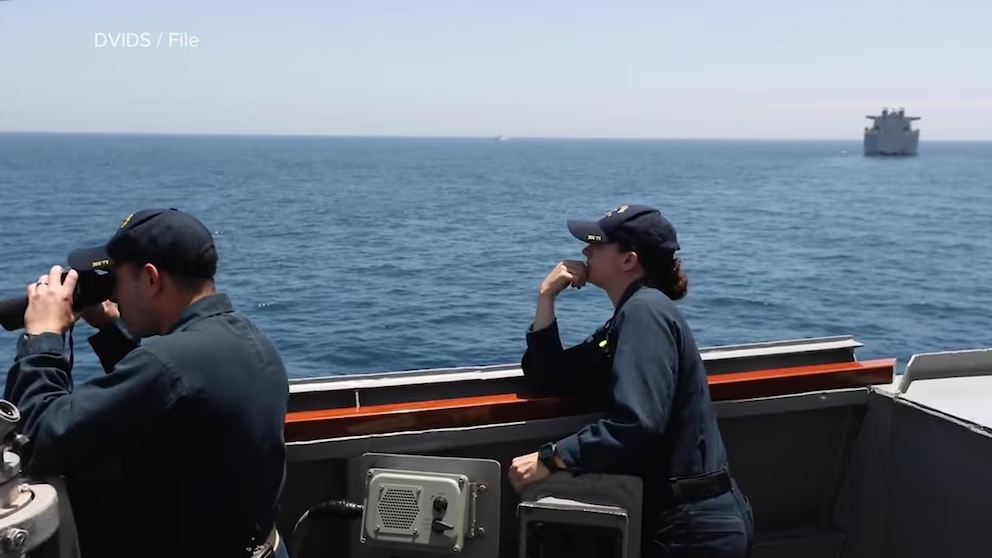
The US plan to “guide” ships through the Strait of Hormuz leaves a lot of unanswered questions about how it would work just hours before President Donald Trump said it will go into effect.
US Central Command said in a statement on X that its support for the operations “will include guided-missile destroyers, over 100 land and sea-based aircraft, multi-domain unmanned platforms.”
How they figure into the ship movement is not defined.
Jennifer Parker, a nonresident fellow at the Lowy Institute and a former Royal Australian Navy officer, told CNN Monday that she expects the US military to increase its presence in and over the strait to provide reassurance to commercial vessels attempting to transit it.
“This appears to be an operation … which is less about providing direct protection to a vessel or a couple of vessels and more about trying to change the situation in the strait” so ships “feel safe,” Parker said.
That could include a few US Navy ships in the strait and a range of aircraft flying over it that could spot and take out any small boats or ships trying to attack commercial vessels, she said.
A narrow waterway that bypasses Iran and Oman, the Strait of Hormuz is the main route for shipping crude from oil-rich countries such as Saudi Arabia and Kuwait to the rest of the world.
The strait has remained a crucial factor since the start of the conflict after it was effectively closed by Tehran. In recent days, it has seen just a handful of crossings, according to Kpler and other shipping data sources.
Iran controls the strait’s northern side. About 20 million barrels of oil, or about one-fifth of daily global production, used to flow through the strait every day, according to the US Energy Information Administration, which calls the channel a “critical oil chokepoint.”
According to the EIA, “very few alternative options exist to move oil out of the strait if it is closed.”
The strait also carries about one-fifth of global trade in liquefied natural gas.
China remains committed to the upcoming meeting between its leader Xi Jinping and US President Donald Trump regardless of the situation in the Middle East, and cautiously views its adversary’s months-long conflict with Iran as having potentially strengthened its negotiating position, according to Chinese sources familiar with the matter.
The rare in-person meeting, already once delayed due to the US-Israeli war with Iran, is now scheduled for May 14-15, according to the White House. Several sources indicate Beijing views the high-stakes summit as a singular opportunity to secure a more stable long-term relationship with its largest economic and military competitor.
But despite the perceived advantage, sources said Beijing remains extremely cautious, with opinion among government insiders split as to how to navigate the myriad complications unleashed by the conflict, not least the prospect of the Strait of Hormuz – through which China imports about a third of its oil and gas – remaining closed when Trump arrives in the Chinese capital.
Trump’s visit “is not the same as any other heads-of-state visit,” said a Chinese source under the condition of anonymity due to the sensitivity of the matter. “Trump’s time in office is likely to have a lasting impact on the world order and has already fundamentally altered how the US views its own interests.”
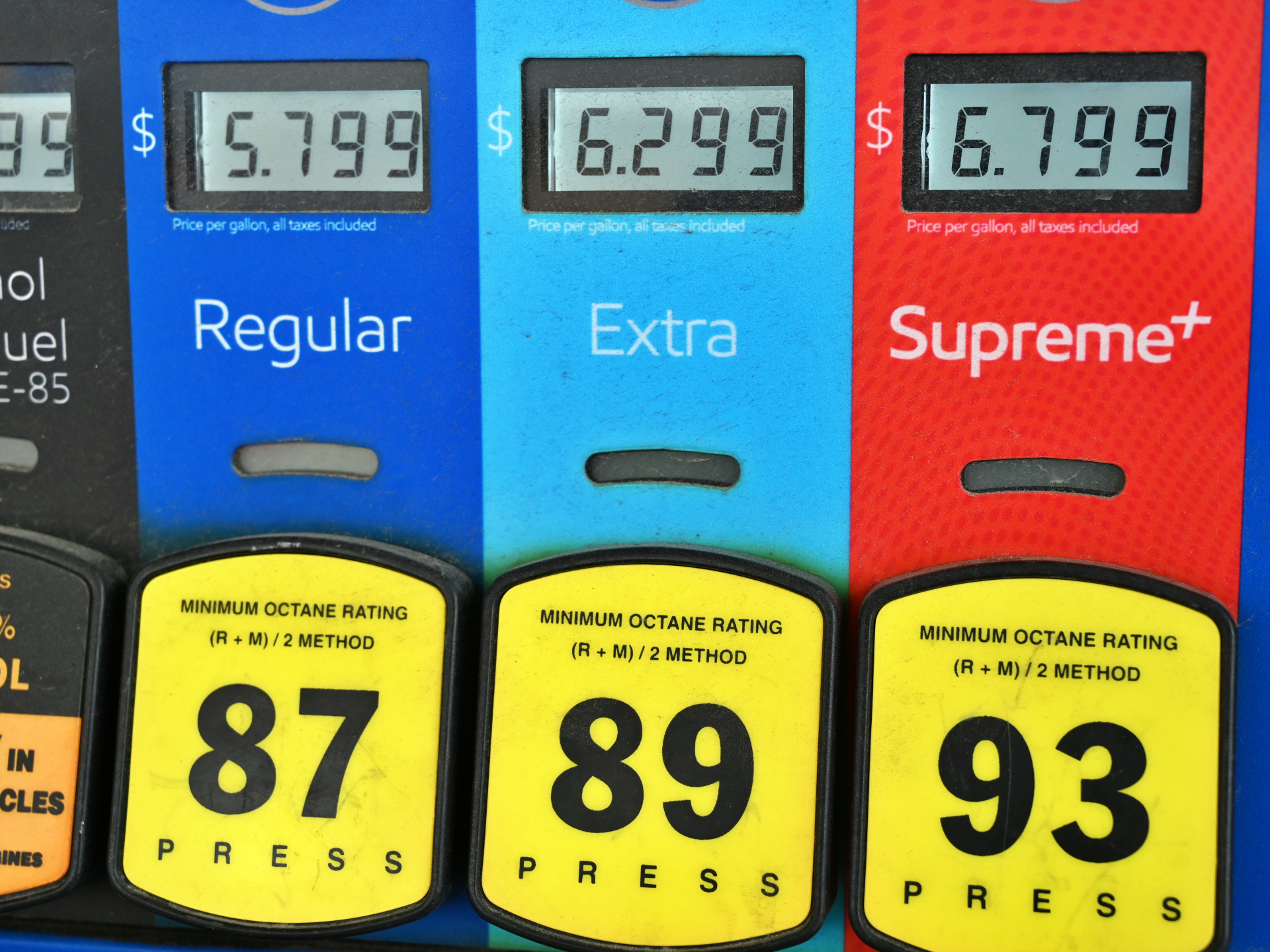
New York City drivers are voicing their frustrations with rising gas prices, telling CNN the war in Iran has led to pain at the pump.
“Us getting involved in a stupid war, I think that’s had, obviously, a direct effect on the cost of everything here,” Jeff Olson told CNN. “We’re only putting small amounts of gas in at a time in the hopes that the prices are going to come down again soon.”